Debit Note vs Credit Note: When Each Corrects an Invoice
The Issueable Team
Small business operations
Credit notes generally reduce a seller's charge. Debit-note usage varies by country and workflow, so identify who issues the document and why.
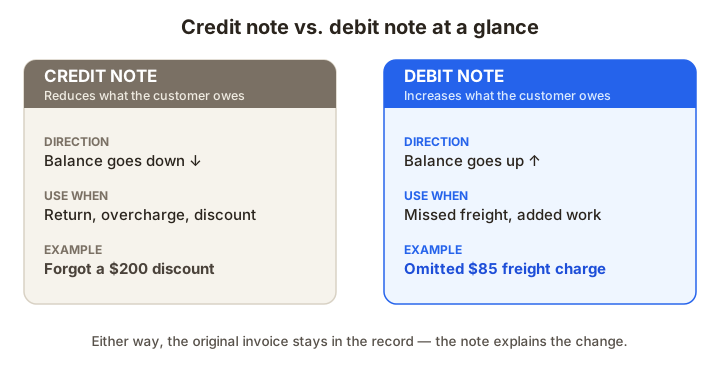
The correction goes up or down
Debit notes and credit notes exist because invoices are not always perfect. A shipment changes, a discount is applied late, freight was missed, a customer returns part of an order, or the original invoice used the wrong tax rate.
The seller-side shorthand is:
- If the correction reduces what the customer owes, use a credit note.
- If the correction increases what the customer owes, use the supplementary invoice or debit document accepted by the jurisdiction and buyer.
Buyer-issued debit notes can point in the opposite commercial direction by recording a return, shortage, or claim against the supplier. Always identify the issuer and account being adjusted.
What a credit note does
A credit note lowers a customer's balance. It can partially reduce an invoice, fully cancel one, or create a credit the customer can use later.
Common reasons:
- You overcharged.
- The customer returned goods.
- Part of the work was cancelled.
- You agreed to a post-invoice discount.
- The tax amount was too high.
- You need to reverse an invoice and reissue it cleanly.
Example: You sent Invoice INV-1042 for $1,000. The client should have received a $200 discount. You issue Credit Note CN-0042 for $200 referencing INV-1042. The customer now owes $800.
The original invoice stays in the record. The credit note explains the reduction.
What a debit note may do
The term is not universal. In some seller systems, a debit note adds an amount to the customer's balance. In many purchasing systems, the buyer issues a debit note to reduce what it owes the supplier. A supplementary invoice, buyer debit memo, or supplier credit note may therefore describe the same commercial problem from different sides.
Seller-side reasons may include:
- The original invoice was too low.
- Freight, handling, or a surcharge was missed.
- Extra billable work was approved after the invoice.
- A price adjustment increased the amount.
Buyer-side reasons may include returned goods, shortages, damage, or an overcharge that the buyer expects the supplier to credit.
Example: You billed $1,000 but later discover approved freight of $85 was omitted. You issue a debit note for $85 referencing INV-1042, or you issue a new invoice for the omitted freight if that is how your buyer processes additions.
The key is that the original invoice remains traceable.
Why not just edit the invoice?
Editing a sent invoice creates two problems.
First, the buyer may already have entered the original into AP. If you quietly replace it, their system and your records no longer match.
Second, tax and audit trails rely on history. A correction document shows what changed, when, and why — an edited invoice can make it look like the original never existed.
If the invoice was still a draft, edit it. If it was issued, use a correction document or a clearly numbered replacement process.
Which document should you use?
| Situation | Document |
|---|---|
| Customer returned part of an order | Credit note |
| You overcharged tax | Credit note |
| You forgot a discount | Credit note |
| You forgot freight or a fee | Debit note or additional invoice |
| Approved scope increased after invoicing | Debit note or additional invoice |
| Original invoice was completely wrong | Credit note and new invoice |
| Customer already paid and needs money back | Credit note plus refund |
For small service businesses, a credit note plus a new or supplementary invoice is often clearer. Product, logistics, wholesale, and procurement systems may have established debit-note workflows that should control the document choice.
What to include on either note
A correction note should be as clear as an invoice:
- Your business details.
- Customer details.
- Unique credit note or debit note number.
- Date issued.
- Original invoice number.
- Reason for the correction.
- Line items or adjustment amount.
- Tax adjustment, if any.
- New balance or effect on account.
Write a specific reason — not just "Adjustment." "Credit for returned item: 2 units of SKU-148" or "Debit for omitted freight charge on INV-1042" leaves no room for confusion a year later.
Tax follows the correction
If the original invoice included tax, determine whether the correction changes the taxable consideration and follow the jurisdiction's adjustment-document rules. A commercial credit does not always receive identical tax treatment, and an additional charge may require a supplementary tax invoice.
That is why the correction should reference the original invoice and show the tax impact clearly. Your accounting system needs to know whether the adjustment affects taxable revenue, non-taxable revenue, freight, discount, or something else.
A simple credit-note workflow
For the most common case - reducing an invoice - use this:
- Find the original invoice.
- Confirm whether it has been paid.
- Issue a numbered credit note referencing the invoice.
- Show the amount and tax being reversed.
- Apply it to the open balance or refund the customer.
- Keep the original invoice and credit note together.
For more detail, see how to issue a credit note or refund.
Keep the original clean
Seller credit notes move the customer's balance down. Debit notes need context because their direction depends on the issuer and system. Both are meant to preserve the history of an adjustment rather than erase the original transaction. Create an invoice in Issueable, keep the PDF, and use the correction document your jurisdiction and trading partner accept.
Frequently asked questions
- What is the difference between a debit note and a credit note?
- From a seller's perspective, a credit note generally reduces an earlier charge. 'Debit note' is less uniform: a seller may use it for an additional charge, while a buyer may issue one to document a return, shortage, or claim against the supplier. Confirm the local tax rules and the parties' accounting workflow rather than relying on the label alone.
- When should I issue a credit note?
- Issue a credit note when you overbilled, accepted a return, gave a post-invoice discount, cancelled part of the work, or need to reverse tax on an invoice that was too high. Reference the original invoice number, state the reason, and show the tax being reversed so both sides can reconcile the balance.
- When should I issue a debit note?
- First confirm who is expected to issue it. Some seller workflows use a debit note for an additional charge; some buyer workflows use one to claim a reduction from the supplier. A supplementary invoice or credit note may be the required tax document instead, depending on the jurisdiction.
- Can I edit the original invoice instead?
- Do not edit a sent invoice unless your accounting process clearly marks it as replaced and both sides agree. For most corrections after issue, use a credit note, debit note, or new invoice so the audit trail stays intact.