How to Issue a Credit Note or Refund
The Issueable Team
Small business operations
When you've overbilled, a client returns something, or a sale falls through, preserve the original invoice and record the correction clearly. Here's how credit notes, refunds, and tax adjustments fit together.
The rule that prevents accounting messes: preserve what you sent
The instinct, when you realize an invoice was wrong, is to open it and replace the number. That can put your copy and the customer's copy out of sync. Preserve the issued version, then record the correction through the workflow your jurisdiction and accounting system use.
A credit note or credit memo is a common tool: it references the original invoice and reduces some or all of the amount. VAT and GST systems may prescribe when and how to issue one; some US systems instead use a credit memo, void, or corrected invoice. The goal is the same: keep the correction legible without erasing the record the customer received.
Credit note vs. refund: they're not the same thing
These two words get used interchangeably, but they're different mechanisms, and confusing them is how books drift out of balance.
A credit note is an accounting document — it lowers the amount a client owes (or records that you owe them a credit) against a specific invoice. No money has to move.
A refund is the movement of money back to the customer.
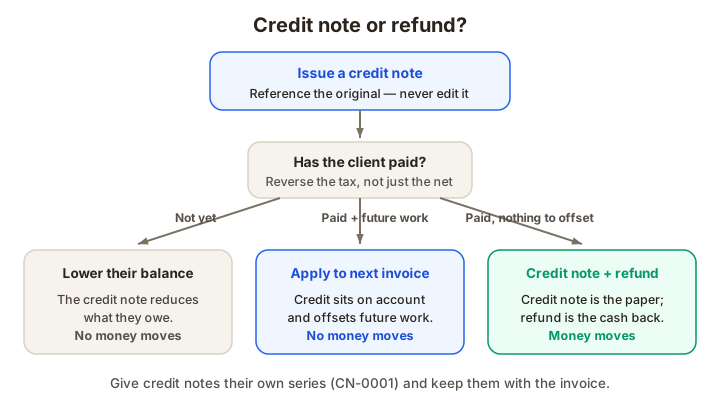
The choice depends on whether the client has already paid:
- Not yet paid → issue a credit note. It reduces their outstanding balance. If they owed $1,000 and you credit $200, they now owe $800. No cash changes hands.
- Already paid, and they have future work with you → issue a credit note and apply it to the next invoice. The credit sits on their account and offsets what they'll owe.
- Already paid, nothing to offset → issue a credit note and refund the money. The credit note is the paperwork; the refund is the cash going back.
Getting this right matters because the accounting adjustment and the movement of money are separate events. Record both when both occur, using the labels and accounts in your bookkeeping system.
When to issue a credit note
The common triggers:
- You overbilled: wrong quantity, wrong rate, a line item that shouldn't have been there.
- A return or cancellation: goods came back, or a booked service didn't happen.
- A post-invoice discount: you agreed to knock something off after the invoice went out.
- A disputed charge you've conceded: cleaner to credit it than to argue.
- A write-off: though for genuinely uncollectible debt, talk to your accountant about whether a credit note or a bad-debt write-off is the right treatment.
In each case the credit note mirrors the part of the original invoice you're reversing, so the math is traceable line by line.
The part people get wrong: reconcile the tax
If the original invoice carried sales tax, GST/HST, or VAT, determine how the correction changes the taxable consideration. Do not adjust only the pre-tax amount and assume the tax return will take care of itself.
Here's why it matters. A reduction in the sale price can also reduce the tax due, but timing and documentation rules differ. HMRC, for example, sets rules for credit and debit notes used to adjust VAT already accounted for. Canadian GST/HST and US state sales-tax returns have their own adjustment rules. Restocking fees, nonrefundable charges, bad debts, and a return filed in an earlier period can change the answer.
At the document level, show the corrected taxable amount and related tax clearly. If the original tax was already reported, check the relevant return instructions or ask your accountant how and when to claim the adjustment.
Refund mechanics: mind the processing fee
When the situation calls for actual money back, the original payment method is usually the safest route and may be required by your processor or fraud controls. Follow the provider's rules and any agreement with the customer. Two practical notes:
First, the processing fee usually doesn't come back. On most card processors, when you refund a payment the customer gets the full amount but the percentage fee from the original transaction isn't returned to you, so a refunded sale can leave you a few dollars down even at a net-zero outcome. Policies differ and change, so check your processor's current terms, but budget for it rather than be surprised by it.
Second, refund promptly and let the customer know. A slow or silent refund is a common trigger for a card chargeback, which costs you more than the refund itself and dings your processor standing. Issue the credit note, process the refund, and tell the customer it's coming.
Numbering and records
Give each credit note a unique identifier and have it name the invoice it corrects. A separate series such as CN-0001, CN-0002 is easy to follow, but local rules or your accounting system may prescribe a different sequence.
Then keep the pair. A credit note is part of the same record set as the invoice it corrects, so retain it for the same period you keep invoices and receipts (see how long to keep invoices and receipts). The invoice, the credit note, and any refund confirmation together are the complete, defensible story of the transaction.
Issue a clean correction
Need to correct or cancel an invoice you've already sent? Preserve its PDF, use the credit-note or correction workflow in your accounting system, and keep the adjustment and refund confirmation together. If that process calls for a replacement invoice, create the new invoice in Issueable with its own identifier and a reference to the original.
Frequently asked questions
- What is a credit note?
- A credit note (or credit memo) is a document that reduces or cancels an amount on a previously issued invoice. You issue one when you've overbilled, a client returns goods, a service is cancelled, or you grant a post-invoice discount. It's effectively a negative invoice: it references the original, reverses some or all of its line items, and adjusts the balance the client owes.
- What's the difference between a credit note and a refund?
- A credit note is an accounting document that adjusts what's owed; a refund is the actual movement of money back to the customer. They often go together but don't have to. If the client hasn't paid yet, a credit note simply lowers their balance, no money changes hands. If they've already paid and have no future invoice to offset, you issue the credit note and also refund the money. Think of the credit note as the paperwork and the refund as the cash.
- Why can't I just delete or edit the original invoice?
- The customer may already have recorded the issued version, so silently replacing or deleting it can leave the two sets of books out of sync. Preserve that version and use the traceable correction process required by your accounting system and jurisdiction. That may be a credit note, credit memo, void-and-reissue workflow, or another documented adjustment.
- How does a credit note affect sales tax or VAT?
- A price reduction or cancellation can require a related tax adjustment, but the document, timing, and calculation depend on the jurisdiction and facts. VAT and GST systems commonly use credit notes to adjust tax already accounted for. US sales-tax treatment varies by state and return, and fees or nonrefundable amounts can change the calculation. Reconcile the taxable amount rather than applying a percentage mechanically.
- Do I get my payment processing fee back on a refund?
- Usually not the percentage. When you refund a card payment, the original transaction's percentage fee is commonly not returned to you by the processor, so a refunded sale can leave you slightly out of pocket on fees even though the customer gets 100% back. Policies vary by processor and change over time, so check your provider's current refund terms before assuming the fee comes back.
- How should I number credit notes?
- Give each credit note a unique identifier and name the invoice it corrects. A separate series such as CN-0001 can make the relationship easy to follow, but use any numbering rules imposed by your jurisdiction or accounting system.