Invoice Numbering Systems That Scale (and Stay Compliant)
The Issueable Team
Small business operations
Invoice numbering looks trivial until a duplicate number triggers an AP hold, or a tax auditor asks why there's a gap in your sequence. A good scheme is sequential, unique, and boring on purpose. Here's how to set one up that still makes sense at invoice 2,000.
The smallest field with the biggest downside
Of all the fields on an invoice, the number looks the most trivial. But duplicate identifiers and unexplained format changes can create AP matching and reconciliation problems. A consistent identifier makes the document easier to trace across both parties' records.
A good invoice numbering system is deliberately boring: sequential, unique, and consistent. Set it up once and it still makes sense at invoice 2,000.
The format: a prefix and a counter
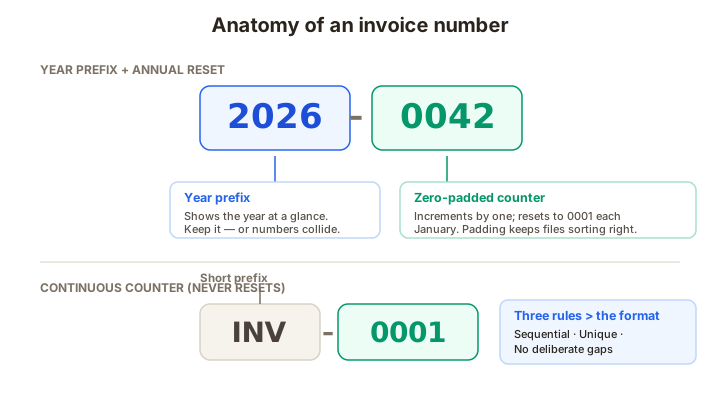
The format that holds up is the plain one. Pick a short prefix and an incrementing, zero-padded number:
INV-0001, a continuous counter that does not reset. Simple and obvious when the counter is assigned atomically and never reused. The zero-padding (0001rather than1) keeps invoices sorting correctly in file lists and spreadsheets long after you pass 1,000.2026-0001, a year prefix with a counter that resets each January. Keeps numbers short and makes the year visible at a glance.
Both are fine. What you want to avoid is loading the primary number with client names or project codes. "Acme-Q3-rev2" is not a number; it's a description pretending to be one, and it breaks the moment you have two Acme projects. Keep the number a clean counter and put client and project context in their own fields, where they belong.
The three rules that matter more than the format
Whatever format you choose, three properties do the real work.
Ordered where required. A sequence makes records easier to review, and some tax systems require sequential numbering. Other jurisdictions focus on a unique identifier and adequate supporting records.
Unique. No number is ever used twice. A reused number means two different documents answer to the same identifier, which is precisely the confusion the whole system exists to prevent.
Explain gaps rather than disguising them. A voided or failed invoice can create a legitimate gap. Keep the cancelled record or an audit note instead of renumbering later documents or pretending the number never existed.
Get those three right and the specific format barely matters.
Reset yearly or run continuous: just commit
Two common patterns, both valid:
- Continuous:
INV-0001onward. It avoids collisions when the counter is assigned correctly and never reused. - Per-year reset:
2026-0001, then2027-0001the following January. Numbers stay short and the year is built in: but only if you keep the year in the number, so2026-0001and2027-0001remain distinct documents.
Switching schemes midstream creates an ambiguous boundary where the old and new sequences meet. Decide at the start and hold it. (Most invoicing tools, Issueable included, increment automatically once you set the starting number and format — which removes the human error entirely.)
Invoice numbering compliance rules
Invoice-number rules vary. UK invoices need a unique identification number, and VAT invoices have additional requirements. Other systems, including Canadian GST/HST, prescribe invoice information according to the transaction and tax rules without turning one numbering pattern into a worldwide standard. A unique, consistent sequence makes reconciliation easier, but retain voids and document exceptions rather than promising a literally gap-free history.
What to do with voided invoices
A voided invoice should remain traceable. Do not reuse its identifier for a different transaction. Mark it voided, retain the record required by your accounting and tax rules, and issue the correction under the applicable process.
If the invoice has reached the client, use the correction method required by the relevant tax system and agreed accounting process. A credit note is common in VAT/GST systems; other transactions may use a void, corrected invoice, credit memo, or refund record. Do not recycle the original identifier.
Formats at a glance
| Format | Example | Good for | Watch out for |
|---|---|---|---|
| Plain sequential | INV-0001 | Simple, continuous ordering | Looks "new" if you start at 1 |
| Year prefix, annual reset | 2026-0001 | Seeing the year at a glance | Must keep the year, or numbers collide across years |
| Year + month | 2026-10-001 | Higher volume; grouping by month | Longer; still needs a within-period counter |
| Start-high counter | INV-1042 | Not signaling you're brand new | Purely cosmetic; no real benefit otherwise |
Any of these is fine. What's not fine is a "format" that's really a description: Acme-final-v2, JuneProject, last-one-promise. Those aren't identifiers; they collide, they don't sort, and they make your records unreadable in hindsight.
Numbering across multiple brands or entities
If you run more than one legal entity, keep each entity's invoices and accounting records clearly attributable to that entity. Separate prefixes or sequences can help, but the correct setup depends on the invoicing and tax rules that apply. Distinct brands inside one entity do not automatically require separate legal sequences.
Switching systems without breaking the chain
When migrating software, prevent duplicate identifiers and preserve the old system's records. Continuing from INV-0481 to INV-0482 is often simplest, but a clearly documented new prefix can also distinguish the new series where local rules permit it. Test the counter before sending the first live invoice.
Let the numbering take care of itself
The cleanest numbering system is one you do not have to reconstruct by hand. Create an invoice in Issueable and review the assigned number before sending, especially after an import or system change. For the rest of the fields that belong on an invoice, see what to put on an invoice.
Frequently asked questions
- What's the best invoice numbering format?
- A simple sequential format with a prefix is hard to beat: INV-0001, INV-0002, and so on. It's unique, ordered, and obvious. If you want the date visible, a year prefix works well (2026-0001) and resets cleanly each year. Avoid baking in client names or project codes as the primary number; keep the number a plain counter and put that context in other fields.
- Can I start at invoice number 1?
- Yes. Some businesses start higher for cosmetic reasons, but the starting value usually matters less than uniqueness, consistency, and adequate records. Do not reuse an issued identifier; document voids or legitimate gaps under the rules that apply to you.
- Do invoice numbers have to be sequential?
- Some jurisdictions require a unique sequential or identifying number, while others focus on a unique identifier and adequate records. A consistent sequence is strong practice, but it does not by itself guarantee compliance everywhere. Check the invoice rules that apply to the seller, tax registration, and transaction.
- Should I reset the sequence each year?
- Either approach can work where local rules permit it. A continuous sequence is simple; a per-year sequence keeps numbers short but must retain the year so identifiers remain distinct. Document any change in method and prevent duplicate numbers during migration.
- What do I do if I void an invoice, can I reuse the number?
- No. Once a number is issued, it's spent, even if the invoice is cancelled. Mark the invoice voided, keep it in the records, and move to the next number. Reusing the number of a voided invoice creates two documents with the same identifier, which is exactly the ambiguity sequential numbering exists to prevent. Use a credit note to reverse an invoice that's already gone out.