Reading an A/R Aging Report (and Acting on It)
The Issueable Team
Small business operations
An accounts-receivable aging report sorts everything you're owed by how overdue it is, and that sorting is the whole point. It tells you which money is fine, which needs a nudge, and which is quietly turning into a write-off. Here's how to read one and what to do with each bucket.
The report that tells you where the risk is
Add up everything your clients owe you and you get one number. It's useful, but it hides the thing you actually need to know: which of that money is fine and which is quietly slipping away. A $30,000 receivables balance that's all due next week is healthy. The same $30,000 sitting three months overdue is a problem you should already be working — same total, completely different situation.
An accounts-receivable (A/R) aging report separates the two. It sorts every outstanding invoice by how overdue it is, turning one ambiguous total into a risk-ranked list. That sorting is the entire value of the report, and once you can read it, it tells you exactly where to spend your collection energy.
How the report is built
The report lists each unpaid invoice (usually grouped by client) and drops it into a bucket based on how long it's been outstanding. The standard buckets:
- Current, not yet due.
- 1–30 days overdue.
- 31–60 days overdue.
- 61–90 days overdue.
- 90+ days overdue.
Read left to right, the report shows increasing age and usually increasing collection concern. It does not assign a collection probability by itself. Watch for drift: balances moving rightward month over month without a documented reason or payment plan.
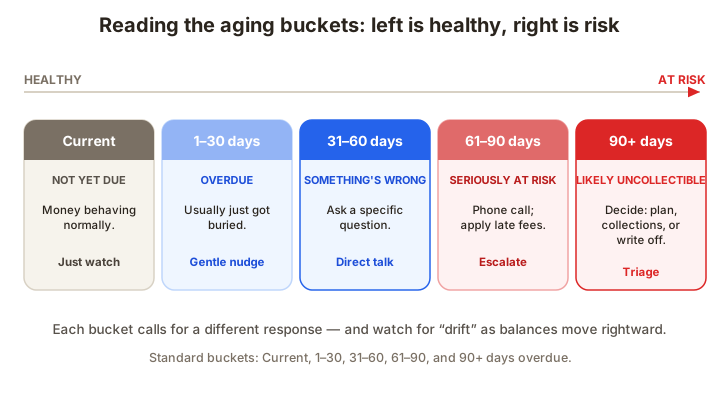
What each bucket is telling you, and what to do
Each bucket calls for a different response.
Current. Verify and monitor. Confirm that the invoice reached the right contact, contains any required PO information, and has a clear due date. A pre-due reminder may help when the buyer has a complex approval process.
1–30 days, check the cause. A friendly reminder that reattaches the invoice is a reasonable first step. Ask whether the invoice is approved, disputed, missing information, or scheduled for a particular payment run.
31–60 days, a direct conversation. If earlier reminders have not resolved the balance, ask a specific question: is there a dispute, a missing PO, or an approval stuck somewhere? Use a clear past-due notice and ask for a specific payment date.
61–90 days, escalate. A balance this old is seriously at risk. Move from email to a phone call, involve whoever holds the relationship, and consider whether your late-fee terms apply. Make it clear, professionally, that this is now a priority.
90+ days, triage. Review the evidence and choose a next step: a payment plan, formal demand, collections process, legal advice, or accounting treatment for a doubtful balance. Age alone does not make a debt worthless. For US tax purposes, the IRS applies specific requirements to bad-debt deductions, including prior income treatment and evidence of worthlessness or collection efforts. The full escalation playbook is in how to handle a client who won't pay.
What an A/R aging report looks like
A simple aging report, grouped by client, reads like this:
| Client | Current | 1–30 | 31–60 | 61–90 | 90+ | Total |
|---|---|---|---|---|---|---|
| Acme Co | $4,000 | — | — | — | — | $4,000 |
| Brightwork | — | $1,200 | — | — | — | $1,200 |
| Cedar LLC | — | — | $3,500 | — | — | $3,500 |
| Dune Studio | — | — | — | — | $2,800 | $2,800 |
| Total | $4,000 | $1,200 | $3,500 | — | $2,800 | $11,500 |
The single "$11,500 owed" figure hides the action queue: verify Acme's upcoming due date, check Brightwork's payment status, ask Cedar for a firm date, and investigate Dune's 90+ balance before deciding how to treat it.
One number to track: DSO
The aging report shows you the snapshot; Days Sales Outstanding (DSO) shows you the trend. It's the average time it takes to get paid after you invoice, and a common way to calculate it is:
(Accounts receivable ÷ total credit sales) × days in the period
If you're owed $20,000 and billed $120,000 over a 90-day quarter, your DSO is about 15 days: on average, you wait roughly two weeks to be paid. The absolute number matters less than its direction. A rising DSO means money is taking longer to come in, and it shows up here before it shows up as an empty bank account. Track it each period alongside the aging report, and a creeping collection problem becomes visible while you can still do something about it.
Two signals beyond the buckets
The aging report rewards a second look for patterns the buckets alone don't shout.
Concentration. If one client is most of your receivables (and most of your revenue), the report doubles as a risk map. A single late payer who represents 40% of what you're owed can sink your month on their own — a different problem entirely from four small ones. Heavy concentration is a signal to diversify clients, not just to chase the invoice.
Provisioning for what may not arrive. Historical collection data can help estimate how much of each aging bucket may become uncollectible. Businesses using an allowance for doubtful accounts should follow the accounting framework and estimation method that apply to them rather than assuming every 90+ balance has the same outcome. For cash planning, an old invoice is a receivable under review, not cash in the bank.
Make it a habit
Set a regular review cadence based on invoice volume and cash-flow exposure. During each review, scan for drift, assign an owner and next action to overdue balances, and track DSO consistently from period to period.
Start with cleaner invoices
The best aging report is a short one, and that starts upstream: clear due dates, correct details, and prompt sending keep invoices from aging in the first place. Create and send your invoices in Issueable so fewer of them ever reach the buckets you'd rather not see.
Frequently asked questions
- What is an accounts-receivable aging report?
- It's a list of everything customers owe you, grouped by how long each invoice has been outstanding: typically into buckets like current (not yet due), 1–30 days overdue, 31–60, 61–90, and 90+. It turns a single 'total owed' number into a risk-sorted picture, so you can see at a glance which receivables are healthy and which are aging into trouble.
- What do the aging buckets mean?
- The buckets measure age, not the cause or certainty of collection. Current balances are not yet due; overdue buckets call for progressively closer review. A 90+ balance may be disputed, collectible, on a payment plan, or doubtful, so assess the customer and invoice rather than applying an automatic write-off rule.
- How do I calculate Days Sales Outstanding (DSO)?
- A common formula is: (accounts receivable ÷ total credit sales) × number of days in the period. If you're owed $20,000, billed $120,000 of credit sales over the quarter (90 days), your DSO is about 15 days. DSO tells you, on average, how long it takes to get paid after invoicing. Track it over time: a rising DSO means money is taking longer to come in, which is an early warning before it shows up as a cash-flow problem.
- How often should I review the aging report?
- Choose a cadence that matches invoice volume and cash-flow exposure. A monthly review may suit a small ledger, while a business with many invoices or tight working capital may review weekly. The goal is to act soon after a due date rather than waiting for the next reporting cycle.
- What should I do about the 90+ bucket?
- Treat it as triage. For each balance, decide realistically whether it's recoverable: offer a payment plan if the client is willing but struggling, escalate to a collections process or formal demand if they're avoiding you, and write it off (with your accountant's guidance on bad-debt treatment) if pursuing it costs more than it's worth. The mistake is leaving 90+ balances untouched on the report indefinitely; they don't improve with age.